
overview
Design Decisions Grounded in How People Actually Use Your Product
Good UI design looks intentional. Good UX design makes sure that intention actually works. When the two aren’t built together, businesses end up with interfaces that look polished but confuse or lose users at critical steps.
We approach UI/UX as one connected discipline, understanding user flows and friction points before a single screen is designed, then building an interface system that’s visually consistent and genuinely easy to use, across websites, web apps and mobile products alike.
Our Services
Unlocking Growth With Purpose-Built Web Design & UI/UX Design Services
You don’t simply want a website that looks good in a screenshot, you want a digital product that works seamlessly for every user on every device, guides them toward the action you need them to take, and holds up under real traffic on real hardware.

Custom Website Design
We design custom websites from the ground up, built around your brand identity, your buyer’s psychology, and the specific conversion action your site needs to drive. No off-the-shelf templates, no page builders that produce bloated code. Every layout, every section, and every interaction is designed for your audience and implemented in clean, performant production code by the same team that designed it.

UI/UX Design for Web Applications
We design the interfaces of web applications, SaaS platforms, dashboards, portals, internal tools, and customer-facing products, through a genuine UX process: user research, user journey mapping, wireframing, prototyping, usability testing, and iterative high-fidelity UI design in Figma. Every interface decision is grounded in how real users think and navigate, not in how the design looks in isolation.

Mobile App UI/UX Design
We design native and cross-platform mobile app interfaces for iOS and Android, from the initial onboarding flow to the core feature set, following Apple’s Human Interface Guidelines and Google’s Material Design principles while building something visually distinctive and functionally intuitive. Prototypes are tested with real users before development begins, not after.

Responsive Web Design
Every website and web application we design is built responsively from the first wireframe, not adapted from a desktop layout after the fact. We design for mobile, tablet, and desktop simultaneously, using fluid grid systems, flexible images, and CSS breakpoints that ensure your site looks intentional and performs correctly at every screen size, not just on the screen we tested last.

UX Audit & Redesign
Already have a website or application that isn’t converting? We run a structured UX audit, heatmap analysis, session recording review, user journey mapping, accessibility review, and Core Web Vitals assessment, identifying the specific friction points costing you conversions, then redesigning the pages or flows that have the highest impact on your business metrics.

Design System Development
For growing businesses and product teams, we build comprehensive design systems in Figma, component libraries, typography scales, colour tokens, spacing systems, and interaction patterns that ensure every screen your team designs in the future is visually consistent, faster to build, and impossible to get wrong, regardless of who designed it.
WHY CHOOSE US
Why Us? Mobile-Ready Designs Built for Better User Experiences.
Design and Development Under One Roof – No Handover Gap
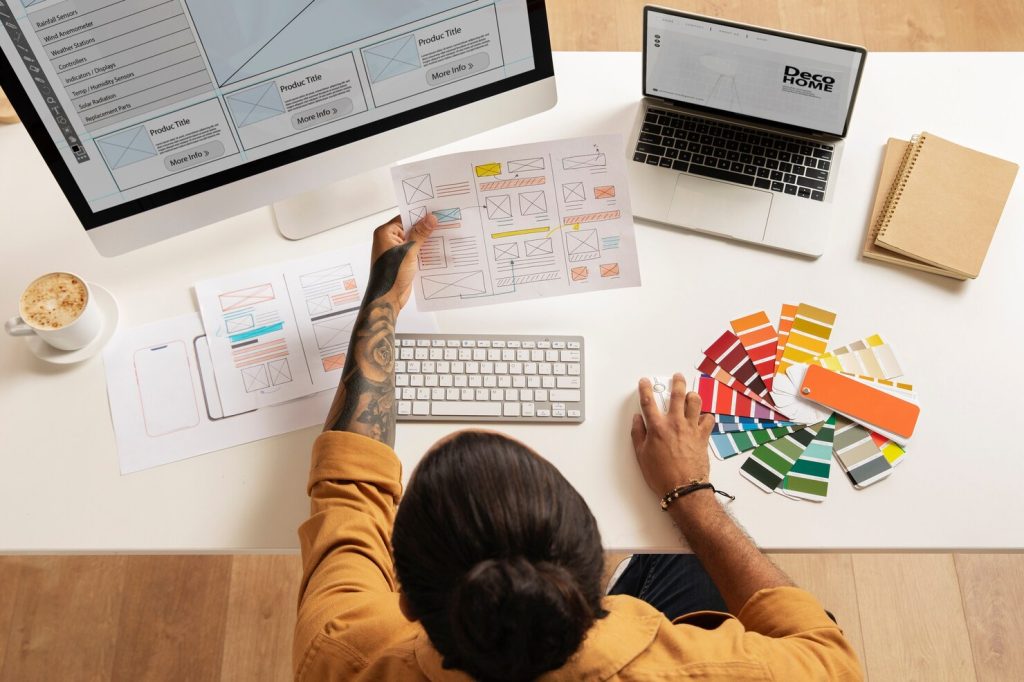
The most common failure in web and UI design projects is the gap between what was designed and what gets built. Pixel-perfect Figma files handed to a separate development team routinely emerge as approximations, slightly wrong colours, substituted fonts, and interaction details that got lost in translation. At Mandy Technologies, the designer and the developer are the same team. What we design is what we build, with the same team ensuring the design intent survives the full journey from frame to browser.
Research-Driven UX – Not Assumptions About Your Users
Most web design decisions are made on aesthetic preference and gut instinct. We make them based on user research. Before a wireframe is drawn or a pixel is placed, we map the actual journeys your users take, the specific points where they drop off, the tasks they’re trying to complete, and the mental models they bring to your interface. Design decisions made from user research consistently outperform those made from taste and the difference shows up in your conversion rate, not just in design awards.
Mobile-First – Built for How Your Users Actually Show Up
We don’t design desktop websites and then squeeze them onto mobile as an afterthought. Every project starts with the mobile experience because that is how the majority of your users will encounter your brand. Mobile-first design produces better desktop experiences, better Core Web Vitals scores, better SEO performance, and fewer compromises across breakpoints, because constraints drive better decisions than unlimited space.
A Long-Term Design Partner, Not a One-Project Studio
Our longest client relationships have lasted over a decade. Good design is never finished, user needs evolve, products add features, analytics reveal new friction points, and a design that performs brilliantly at launch needs iteration twelve months later. We offer ongoing design retainers for growing products and evolving websites, reviewing performance, testing changes, and maintaining the design system as your product grows.
WHAT’S INCLUDED
What’s Included in a Brand Identity & Logo Design Engagement?
From the first discovery call to post-launch performance review, here is exactly what you get when you partner with Mandy Technologies for web design and UI/UX design.
01
Brand Strategy & Visual Research

02
Creative Direction & Design Planning
03
Website UI/UX Design Development
04
Visual Identity & Design System Creation
05
Design Review & Final Refinements
06
Final Delivery & Project Handover





Recent works
Brand Identities That Changed How Our Clients Are Perceived in Their Market.
-
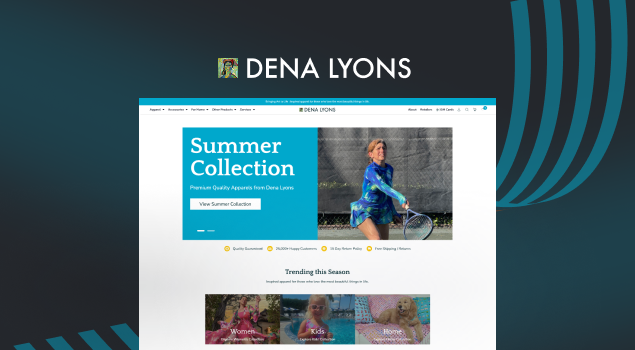
Dena Lyons
Dena Lyons, a luxury apparel and accessories brand carried in country club boutiques and resort shops across the US, brought…
95% increase in page optimizationMaintenanceSEO -
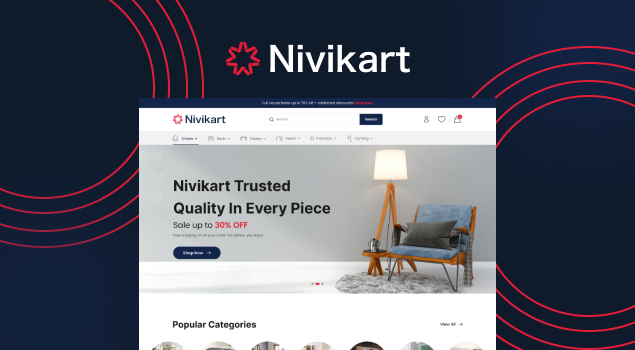
Nivikart
Nivikart came to Mandy Technologies as a from-scratch build: a new hyperlocal appliances and furniture retailer needing a brand identity,…
90% increase in page optimizationDevelopmentUI/UX DesignMaintenance -
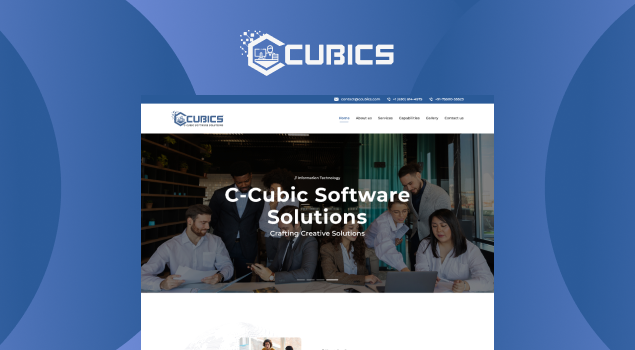
CCubic Software Solutions
CCubic Software Solutions Private Limited partnered with Mandy Technologies to build a website that reflects its position as a technology…
92% increase in page optimizationDevelopmentUI/UX DesignMaintenance -
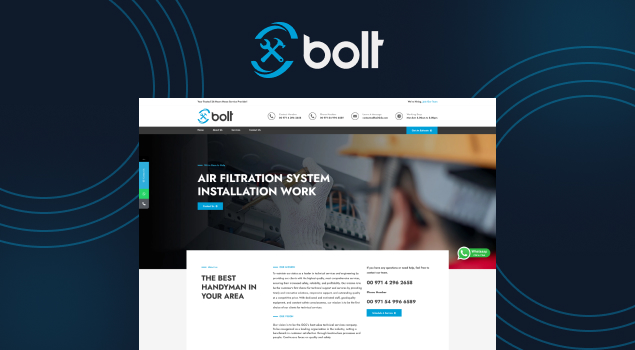
Bolt Integrated Technical Services
Bolt Integrated Technical Services, known to customers as Bolt DXB, is a Dubai-based property maintenance company handling everything from AC…
100% increase in page optimizationDevelopmentUI/UX DesignMaintenance -
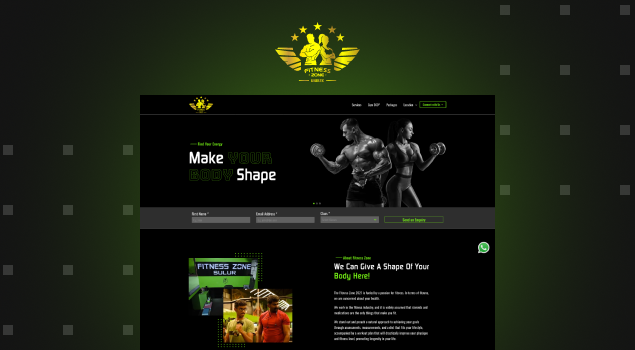
Fitnesszone
Fitness Zone Fit, known locally as Fitnesszone, operates two gyms in Coimbatore, in Sulur and Pappampatti Pirivu, offering training across…
100% increase in page optimizationDevelopmentUI/UX DesignMaintenance
OUR PROCESS
Our UI/UX Design Process, From User Research to a Developer-Ready Figma File in 8 Structured Stages.
Every UI/UX design project at Mandy Technologies follows a structured, research-led process that eliminates guesswork, reduces revision cycles, and produces designs that both impress stakeholders and implement cleanly by development teams.
(01)
Design Brief & Alignment
We capture your goals, audience, constraints, and success metrics. Both sides align before work begins, no ambiguity, no scope drift.
(02)
User Research
Persona development, user journey mapping, and where possible: user interviews, survey analysis, or heatmap/analytics review of existing products.
(03)
Competitor UX Analysis
Systematic review of competitor digital experiences, what works, what does not, and where the whitespace opportunity exists for your product.
(04)
Information Architecture & Wireframing
Site structure, navigation logic, and low-fidelity wireframes, the skeleton before the skin. Reviewed and approved before visual design begins.
(05)
Visual Design in Figma
High-fidelity UI design at all breakpoints. Two rounds of structured feedback. Formal sign-off before handover preparation begins.
(06)
Interactive Prototype
Clickable prototype for key journeys, used for stakeholder review, usability testing, or investor presentations.
(07)
Interaction Specifications
All states, transitions, animations, and micro-interactions are documented, so the development team implements what was designed, not an approximation of it.
(08)
Developer Handover
Fully annotated Figma file, component library, spacing documentation, and a dedicated handover call with your development team. Revisions included for implementation queries.
FAQ’s
web design Questions
What is the difference between web design and UI/UX design?
Web design is the broader discipline of planning and creating a website’s visual appearance, layout, and information hierarchy, what it looks like and how content is structured. UI design (User Interface design) is the specific discipline of designing interactive elements within a digital product, buttons, forms, navigation, and micro-interactions. UX design (User Experience design) is the research and structural process that determines how the product should work before visual design begins, user research, journey mapping, wireframing, and usability testing. For websites, web design and UI design often overlap significantly. For complex web and mobile applications, UX and UI become distinct, deeper disciplines with their own processes and deliverables.
What is responsive web design?
Responsive web design is the technical and design approach of building websites so that the layout, content, and interactive elements adapt fluidly to any screen size, mobile, tablet, or desktop without requiring a separate mobile site or user agent detection. It is achieved through fluid grid layouts, flexible images, and CSS media query breakpoints that define how the design reflows at different screen widths. In 2026, with nearly 60% of global web traffic coming from mobile devices, responsive design is a baseline requirement, not an optional enhancement.
What does a UX designer do?
A UX (User Experience) designer researches and understands how target users think, what they are trying to accomplish, and what stands between them and their goal, then designs the information structure, navigation flows, wireframes, and interactive prototypes that remove those obstacles. Their output is typically wireframes and prototypes in Figma, documented user research insights, and user flows that define how the product should be built, before a UI designer makes it look good and a developer brings it to life.
How long does a web design project take?
Timelines depend on scope and complexity. A basic responsive marketing website (five to ten pages, custom design, CMS integration) typically takes four to six weeks from kickoff to launch. A medium-scope website (ten to thirty pages, custom design system, multiple integrations) typically takes six to ten weeks. A full web application with UI/UX research, complex user flows, and custom development typically takes twelve to twenty weeks. We provide a detailed timeline at project kickoff based on the agreed scope.
What is mobile-first design and why does it matter?
Mobile-first design is the practice of designing the mobile version of a website or application before the desktop version, starting with the most constrained screen size and progressively enhancing the design for larger screens, rather than adapting a desktop design down to mobile as an afterthought. It matters because nearly 60% of global web traffic comes from mobile devices in 2026, Google indexes and ranks the mobile version of your site first (mobile-first indexing), and 40% of users will abandon a site with a poor mobile experience. Mobile-first design produces better responsive results than desktop-first because constraints force better design decisions.
What is a design system and does my project need one?
A design system is a library of reusable UI components, design tokens (colour, typography, spacing), and documented usage guidelines that ensure visual consistency across every screen of a digital product. Your project benefits from a design system if you have an ongoing product with multiple team members designing features, if you need to maintain visual consistency across a large website or application, or if you plan to scale the product significantly after launch. For smaller, well-defined projects, a comprehensive Figma component library is often sufficient without the overhead of a full design system.
Can Mandy Technologies design and build both the website and the mobile app UI?
Yes. We design and build across web and mobile, custom website design, web application UI/UX, and native mobile app UI design for iOS and Android. For clients building both a web product and a mobile application, having the same design team work across both ensures a consistent design system, unified interaction patterns, and a cohesive brand experience across every digital touchpoint your users encounter.