

Introduction
The way people search has changed. The way businesses optimize must change too.
A few years ago, ranking on Google was the goal.
Today? Being found isn’t enough. You need to be answered. You need to be cited. You need to be trusted by AI.
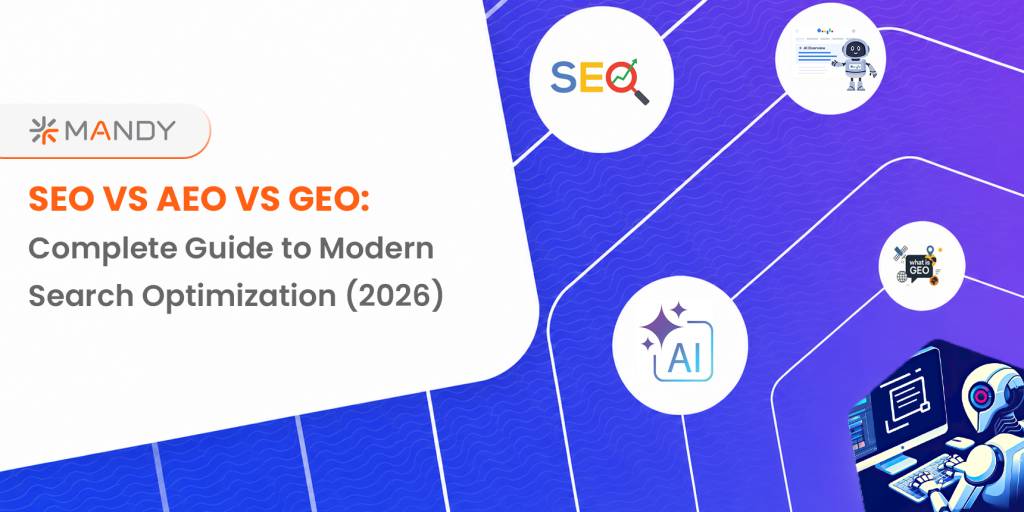
And that’s exactly why three terms are dominating digital marketing conversations in 2026:
SEO. AEO. GEO.
- SEO (Search Engine Optimization)
- AEO (Answer Engine Optimization)
- GEO (Generative Engine Optimization)
Most businesses understand SEO. Some are beginning to explore AEO. Very few truly understand GEO.
Yet together, these three strategies are shaping the future of online visibility.
The question is no longer: “How do I rank on Google?”
The real question is: “How do I stay visible wherever people search?”
Search Has Quietly Changed
Think about your own behaviour. Five years ago, you probably searched like this:
“Best SEO company in Coimbatore“
Today, you might ask:
“What is the best SEO strategy for a small business?“
Or even open ChatGPT and type:
“Create an SEO plan for a local business in Coimbatore.“
The intent remains the same. The search experience has changed completely. Users no longer just search.
They ask. They converse. They expect immediate answers.
And search engines are adapting rapidly.
Google now offers AI Overviews. Voice assistants answer questions directly. AI platforms summarize information without users ever clicking a website.
The numbers back this up. More than 60% of Google searches now end without a click to a third-party website, and that share keeps climbing as AI-generated answers take over more of the results page. Meanwhile, ChatGPT alone fields billions of prompts a day — a large share of which function as search queries — and click-through rates from AI answers back to source websites run far lower than from classic search results.
This shift created three distinct optimization approaches.
What is SEO (Search Engine Optimization)?
SEO is the practice of optimizing websites and content to improve rankings in search engine results pages (SERPs). The primary goal of SEO is to increase organic traffic and attract users searching for relevant keywords.
Why is SEO Important?
SEO helps businesses:
- Increase website visibility
- Generate organic traffic
- Attract potential customers
- Build brand awareness
- Increase leads and sales
- Reduce reliance on paid advertising
Where is SEO Used?
SEO is commonly used for:
- Business websites
- E-commerce stores
- Blogs
- Portfolio websites
- Educational websites
- News and media platforms
How Does SEO Work?
On-Page SEO
On-page SEO focuses on optimizing content and page elements.
Key activities include:
- Keyword optimization
- Title tag optimization
- Meta description optimization
- Heading structure (H1, H2, H3)
- Internal linking
- Image optimization
Technical SEO
Technical SEO improves website performance and search engine accessibility.
Important factors include:
- XML Sitemap
- Mobile-friendly design
- Fast loading speed
- HTTPS security
- SEO-friendly URLs
Off-Page SEO
Off-page SEO focuses on building authority and trust.
Common strategies include:
- Backlink building
- Guest posting
- Social media promotion
- Brand mentions
SEO Example
Keyword:
WordPress SEO Guide
Optimized Title:
Complete WordPress SEO Guide for Beginners
Objective:
Rank higher when users search for WordPress SEO-related topics.
What is AEO (Answer Engine Optimization)?
AEO is the process of optimizing content so answer engines can extract and display direct answers to user questions.
Instead of simply showing links, answer engines provide concise answers directly within search results, voice assistants, and featured snippets.
Why is AEO Important?
AEO helps businesses:
- Appear in featured snippets
- Improve voice search visibility
- Build authority and trust
- Deliver quick answers
- Improve user experience
Where is AEO Used?
AEO works especially well for:
- FAQ pages
- Blog posts
- Knowledge bases
- Help centers
- Product documentation
- Service pages
How Does AEO Work?
Use Question-Based Headings
Examples:
- What is SEO?
- Why is SEO important?
- How does SEO work?
Create FAQ Sections
Provide direct answers to common user questions.
Implement Structured Data
Use schema markup such as:
- FAQ Schema
- How-To Schema
- Article Schema
AEO Example
Question:
What is WordPress?
Answer:
WordPress is a content management system (CMS) used to create websites and blogs.
This answer may appear in a featured snippet or voice search result.
What is GEO (Generative Engine Optimization)?
Generative Engine Optimization (GEO) is the process of optimizing content so AI-powered search systems can understand, summarize, trust, and reference it when generating responses.
As AI search becomes more common, GEO helps businesses remain visible within AI-generated answers.
Why is GEO Important?
GEO helps organizations:
- Increase visibility in AI-generated responses
- Improve chances of being cited by AI systems
- Build authority and expertise
- Support future search experiences
- Improve content discoverability
Where is GEO Used?
GEO is especially useful for:
- Blogs
- Research articles
- Tutorials
- Case studies
- Documentation
- Educational resources
- Industry guides
How Does GEO Work?
Create Comprehensive Content
Cover:
- What it is
- Why it matters
- How it works
- Examples
- Best practices
- FAQs
Include Credible Information
Add:
- Statistics
- Research findings
- Industry reports
- Expert opinions
Build Topical Authority
Publish multiple interconnected articles around the same subject.
GEO Example
Basic Topic:
SEO Tips
GEO-Optimized Topic:
Complete SEO Guide for Small Businesses: Strategies, Tools, Examples, and Best Practices
This provides enough context for AI systems to understand and reference the content effectively.
SEO vs AEO vs GEO: Key Differences
| Feature | SEO | AEO | GEO |
|---|---|---|---|
| Full Form | Search Engine Optimization | Answer Engine Optimization | Generative Engine Optimization |
| Primary Goal | Rank in search engines | Become a direct answer | Be referenced by AI systems |
| Focus | Keywords and rankings | Questions and answers | Context and expertise |
| User Behavior | Searches keywords | Asks questions | Has conversations with AI |
| Output | Search results page | Featured snippets and answer boxes | AI-generated responses |
| Content Style | Keyword-focused | Q&A-focused | Comprehensive and authoritative |
Real-World Example: SEO, AEO, and GEO Working Together
Imagine a digital marketing agency targeting local businesses.
SEO Strategy
Target keyword:
“SEO Services for Small Businesses”
Goal:
Rank in search engine results.
AEO Strategy
Answer questions such as:
- What are SEO services?
- How much does SEO cost?
- Why is SEO important?
Goal:
Appear in featured snippets and voice search.
GEO Strategy
Publish comprehensive guides, case studies, and expert resources.
Goal:
Become a trusted source referenced by AI search systems.
Best WordPress Plugins for SEO, AEO, and GEO
Features:
- Keyword optimization
- XML sitemap generation
- Schema markup
- Search engine indexing support
Features:
- Content analysis
- Meta optimization
- Readability scoring
- XML sitemap support
Features:
- Technical SEO tools
- Schema support
- Social media integration
- Search visibility improvements
Best Practices for SEO, AEO, and GEO
To maximize visibility across search engines, answer engines, and AI-powered platforms:
- Write for users first
- Use clear heading structures
- Answer questions directly
- Implement schema markup
- Create comprehensive content
- Build topical authority
- Include trustworthy sources
- Update content regularly
- Improve page speed and mobile usability
- Add internal links to related content
- Standardize how your brand and offerings are described across every channel
- Monitor your visibility inside AI answers, not just your search rankings
The Future of Search Belongs to Hybrid Optimization
The businesses that dominate search in 2026 won’t be the ones chasing algorithms. They’ll be the ones creating genuinely useful content.
Search engines want relevance. Answer engines want clarity. AI engines want context.
The overlap between these three creates the future of content marketing.
What Mandy Technologies Believes
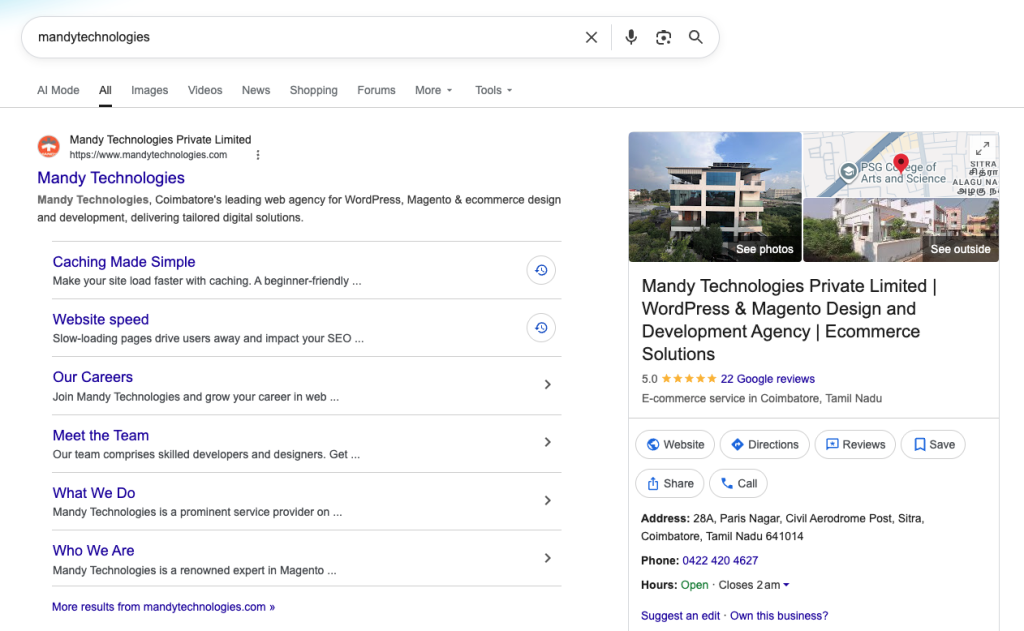
At Mandy Technologies, we see SEO, AEO, and GEO as three parts of the same strategy. The goal isn’t simply to rank.
The goal is to become the most trusted source wherever your audience searches, whether that’s Google, voice assistants, AI Overviews, ChatGPT, Gemini, or future AI-powered platforms.
Because the future of search isn’t about being seen. It’s about being chosen.
Frequently Asked Questions (FAQs)
What is the difference between SEO, AEO, and GEO?
SEO focuses on ranking webpages in search engines. AEO focuses on providing direct answers to user questions. GEO focuses on helping AI systems understand and reference content in generated responses.
What is SEO in digital marketing?
SEO is the practice of optimizing websites and content to improve visibility and rankings in search engine results, helping businesses attract organic traffic.
What is AEO in digital marketing?
AEO focuses on optimizing content so answer engines can provide direct responses through featured snippets, voice search, and answer boxes.
What is GEO in digital marketing?
GEO is the process of optimizing content so AI-powered systems can understand, summarize, trust, and reference it in generated answers.
Why is AEO important for voice search?
Voice assistants typically provide a single answer instead of multiple search results. AEO increases the likelihood of becoming that answer.
How can businesses optimize for GEO?
Businesses can optimize for GEO by creating detailed content, demonstrating expertise, citing reliable sources, publishing topic clusters, and answering user questions comprehensively.
Which is more important: SEO, AEO, or GEO?
All three are important. SEO drives search visibility, AEO improves direct-answer visibility, and GEO prepares content for AI-powered search experiences.
Conclusion
SEO, AEO, and GEO are not competing strategies—they complement one another.
SEO helps users discover your website through traditional search engines.
AEO helps answer engines provide direct responses from your content.
GEO helps AI systems understand, trust, summarize, and reference your content in AI-generated answers.
Organizations that implement all three strategies will be better positioned for today’s search landscape and the future of AI-driven discovery.
By combining SEO, AEO, and GEO into a unified content strategy, businesses can increase visibility, build authority, and reach audiences across search engines, answer engines, and AI-powered platforms.
Have questions about SEO, AEO, or GEO? Get in touch with us today, and let’s explore the best search optimization strategies for your business goals.